Save the Date: 8-9 June, Stockholm University, Department of Special Education, Albano

(Special) Education in youth prisons: Inclusion, Autonomy and Coercion

The aim of this conference is to examine how young people in youth prisons can be educated and the extent to which these educational practices are embedded in a wider coercive environment, i.e. of juvenile justice. The conference draws on the interdisciplinary character of this question. It will therefore facilitate discussions and cooperation among various academic disciplines with knowledge and interest in the subject. These include special education, education, social work, criminology, and history.

Foto: Öppningsdagen 30/8 2021. Albano. Albanotrappan.
Ingmarie Andersson/Stockholms universitet

Background

In the Swedish context, the conference issue is extremely up-to-date, due to significant policy efforts to build youth prisons for offenders aged 13 to 17 at scale, with the goal of having them ready by July 1, 2026. Until the autumn of 2023, the Swedish National Board of Institutional Care had been responsible for managing the punishment of young people aged 13–17 who were convicted of serious crimes. Since that date, responsibility for this group has shifted to the Swedish Prison and Probation Service (hereafter SPPS). From now on, young people will serve their sentences in specially adapted youth prisons set up within regular prisons (Regeringen, 2023).

This organisational change reflects the influence of the contemporary debate on tougher sentences for children and young people, as well as the need to prioritise punishment over care for those who have committed serious crimes (Regeringen, 2025). When the youth prisons open, young people will become a new client group in the prison system. There are several reasons behind this policy change. In recent years, serious crime has increased among children and young people in Sweden. The number of children convicted of such offences has tripled since January 2023 (Zandén, 2025). Sweden stands out in the statistics of young people committing serious offences, especially in the context of a decline in crime among young people more generally (Svensson & Oberwittler, 2021). The young age of the perpetrators and the severity of the offences raise questions of prevention: what measures should be adopted to curb such crime and how punitive should those measures be?

Moreover, historical and international evidence underscores the fact that education provided during a period of detention is crucial to the rehabilitation of convicted young people. Unfortunately, in this, it is very little known for the contemporary Swedish context. To exemplify this problematic knowledge gap: The new client group of young people sentenced to time in a youth prison will meet educational prison officers and teachers during their stay. The role of these professionals is to encourage young people into education, simply said, to mould the young offenders into functioning citizens and to prevent their return to crime after their stay in the institution.

This highlights a necessary research focus of educational and special educational responsibility within closed institutions, where inmates require individualised education and social support to cope with life after institutionalisation (Fickler-Stang, 2023; Krause & Wittrock, 2021). Moreover, it reactualises the eternal debate surrounding youth detention: the complex and confusing relationship between education and coercion. From a research perspective, as outlined in the planned conference, important and challenging questions arise about how various requirements for designing an education system can be effectively implemented in a youth prison, as well as how education can prevent young people from reoffending (Knop, Fickler-Stang, & Zimmerman, 2022).

However, debates about youth prisons and the forms they should take are not new or particular to Sweden or elsewhere. Consequently, historically and internationally, several approaches to the mentioned issues have been discussed. The justification for this international conference is to bring together representatives from various knowledge bodies with expertise in youth criminality, juvenile justice systems and education in them, spanning different national contexts. This can provide valuable insights when systematically related to the contemporary situation in Sweden.
Featured Panelists

Keynotes and Organisers

Explore insights from professionals across education, criminology, social work, and history.

Professor
Frieder Dünkel 

Professor of Criminology, Past chair of Criminology at the University of Greifswald. Among other he has conducted comparative legal and empirical studies in the fields of criminology, juvenile criminal law and the prison system. 

Associate Professor
Ulrike Fickler-Stang 

Associate professor of special education at Humboldt University Berlin. Her research concerns both special education and education practices within the contexts of youth prisons. She has also conducted research on young people with social and emotional disabilities.

Associate
Professor
Elizabeth Kim 

Associate Professor in the Department of Community Health Sciences at UCLA. Her research focuses on service delivery models to address the mental, emotional, and behavioural health needs of youth in and at-risk for being involved in the juvenile justice system.

Professor
Julian Knop 

Professor of criminology at the Alice Salomon University of applied science of social work in Berlin. He has researched the German juvenile justice system. His main interest is education and education rights in juvenile justice systems.

Professor
Damien Soyoner

Professor of Anthropology at the University of California. His research focus is on (anti) carceral pedagogy, Education, Urban Anthropology, Race, Masculinities.

Professor
E. Sabina Vaught 

Professor of education at the University of Pittsburgh. Her research considers global carceral and liberatory knowledge movements broadly and the race-gender labour and conquest relationships among schools, prisons, and insurgent communities specifically.

Assistant Professor
Ulrika Norburg,
Head of Organisation Committee 

 PhD in Child Studies and Senior Lecturer at the Department of Special Education at Stockholm University. Her research focuses on children and young people in institutional settings.

Professor
Wieland Wermke, Head of Organisation Committee

Professor of Special Education. His research concerns (Special) Education professions and Special Education Institutions. He has a certain interest in the phenomenon of educational autonomy  

Conference Programme

(Special) Education in youth prisons: Inclusion, Autonomy and Coercion
Day 1

June 8, 2026

10:00-10:30

Keynote 1: "Welcome, Conference theme and rationale and the current Swedish situation." 

Wieland Wermke, Ulrika Norburg (SU) 

10:30-11.10

Keynote 2: "Youth imprisonment in Europe – legal conditions and standards."
Frieder Dünkel, University of Greifswald

Moderator: Tobias Ringeisen

11.30-12.10

Keynote 3: "The educational mandate in youth Prison in Germany – theoretical foundations, normative frameworks, and empirical insights from within" 
Ulrike Fickler-Stang & Julian Knop, Humboldt University Berlin and Alice Salomon University of Applied Science 

Moderator: Wieland Wermke

12.30-13.30

Lunch 

13:30-14:00

Panel 1: European Research Network on Education in Prison
Annika Krause, University of Oldenburg, Jens Borchert, University of applied science, Merseburg, European Network 

Moderator: Ulrika Fickler-Stang

14:15-15:30

Panel 2: "Nordic perspective (Denmark, Norway, Finland)"
Sofie Amalie Poulsen & Linda Kjaer, University of Southern Denmark "Youth in Danish prisons: Everyday practices, coercion, and the right to education." 
Lise Jones, University of Bergen, Norwegian prison service for incarcerated young people. 
Paula Alanen, Tampere University "The right to education: case of underage and young prisoners in Finland"

Moderator: Ulrika Norburg

15:30-16:30

Coffee 

16:30-17:15

Panel 3: “Students at risk or matching clients”

Martin Hugo, University of Borås "Hope, Wonder and Uncertainty – Being a Student with Intellectual Disability in the Swedish National Board of Institutional Care (SiS)."

Antigone Estratoglou, Open Hellenic University "The Prison School as Refuge? What It Takes for Education to Be Reparative. Expanding Roles and Fragile Boundaries in Youth Prisons"

Moderator: Pär Widén

17:30-18:30

Keynote 4: "What is an Abolitionist Perspective?"
Sabina Vaught & Damien Soyoner, University of Pittsburgh and University of Irvine California 

Moderator: Wieland Wermke

19:00

Dinner 
Day 2

June 9, 2026

8:30-9:10

Keynote 5: "The Promise of Evidence-Based Practice and Policy: Equity and Justice First"  
Bo-Kyung Elizabeth Kim, UCLA 

Moderator: Tobias Ringeisen

9:15-10:30

Panel 4: "The Youth prison as educational institution."

Stephanie Ernst, University of Fulda, "The Educational Concept" on Paper: Pathways to Youth Detention and Youth Penalty in German Juvenile Law." 

Johanna Schmid, Land Berlin, Director Berlin Youth Prison "The "educational concept" behind bars: Guidelines and objectives defined in the Berlin Juvenile Penalty Act."

Langer, Janet, Prof, Rostock University "Education and Relationship in Juvenile Detention."

Moderator: Julian Knop

10:30-11:00

Coffee 

11:00-11:45

Panel 5: "Historical accounts 1"

Bengt Sandin & Rebecka Andersen, Linköpings Universitet & Marie Cederskjöld University "A Third Way? Education, Labour, and Coercion in Swedish Youth Reformatories, 1905–1948"

Dennis Albertsen, Malmö University "To be willing, and able: Learning through labour at the Swedish reformatory Bona, 1905–1947"

Moderator: Pär Widén

11:45-12:30

Panel 6: "Historical accounts 2"

Viktor Englund, Uppsala University "Learning from the past – prison as a deprivation punishment and the importance of affordance." 

Ellen Ceder Henriksson, Södertörn University "Putting Truants in Their Place: Institutional Responses to Truancy."

Moderator: Ulrika Norburg

12.30-13.30

Lunch 

13:30-14:45

Panel 7: "Critical pedagogy perspectives"

Susanne Leitner, University of Applied Science, Ludwigsburg "Repoliticising Trauma in Youth Detention? Tensions Between Trauma Pedagogy and Critical Pedagogies under conditions of coercion."

Pär Widén, Malmö University "A Theoretical Problematization of Youth Incarceration Facilities and Civic Education as a Biopolitical intervention Project."

Moderator: Tobias Ringeisen 

14:50-15:00

Conference closing 

Wieland Wermke, Ulrika Norburg (SU) 

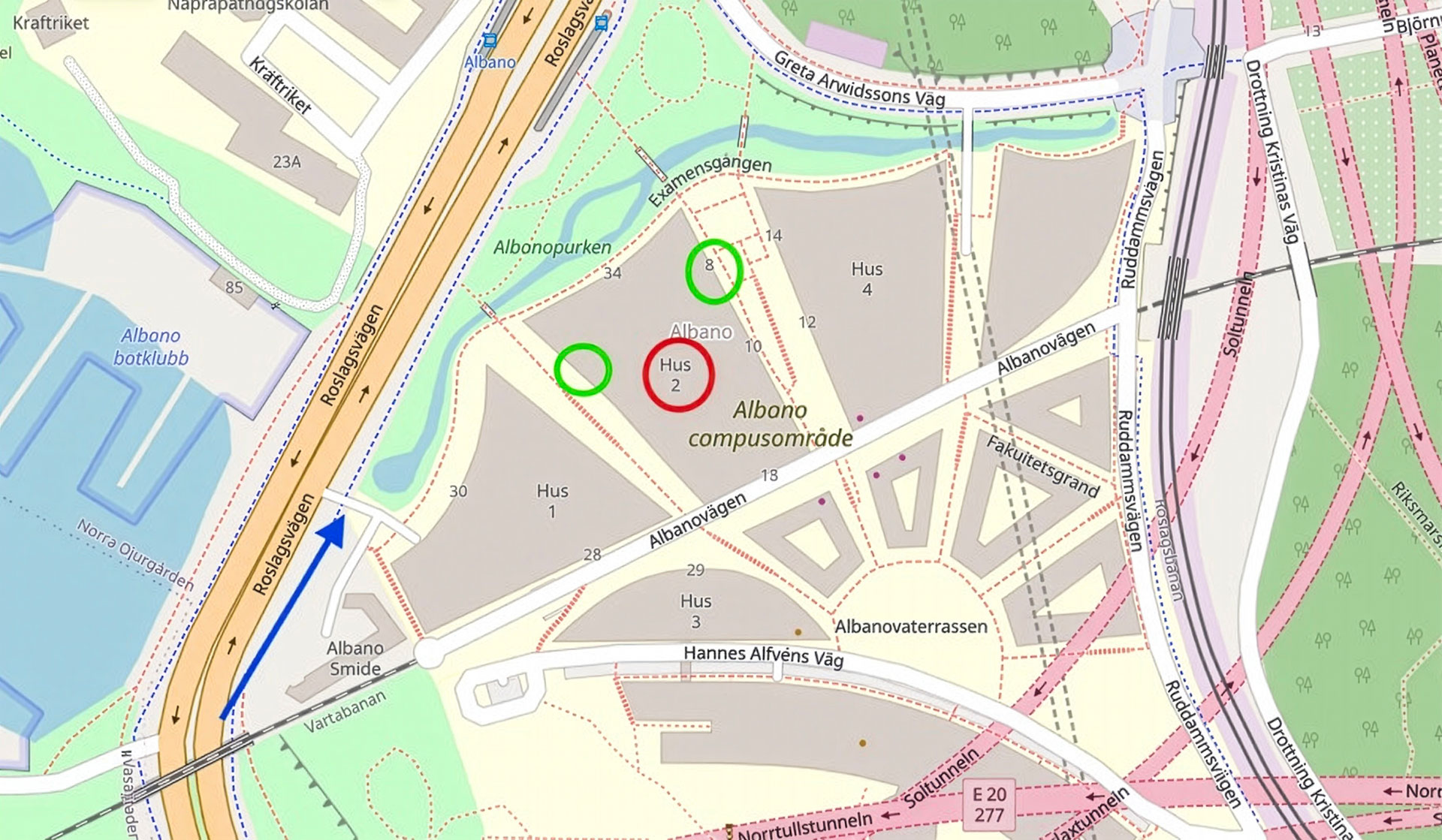
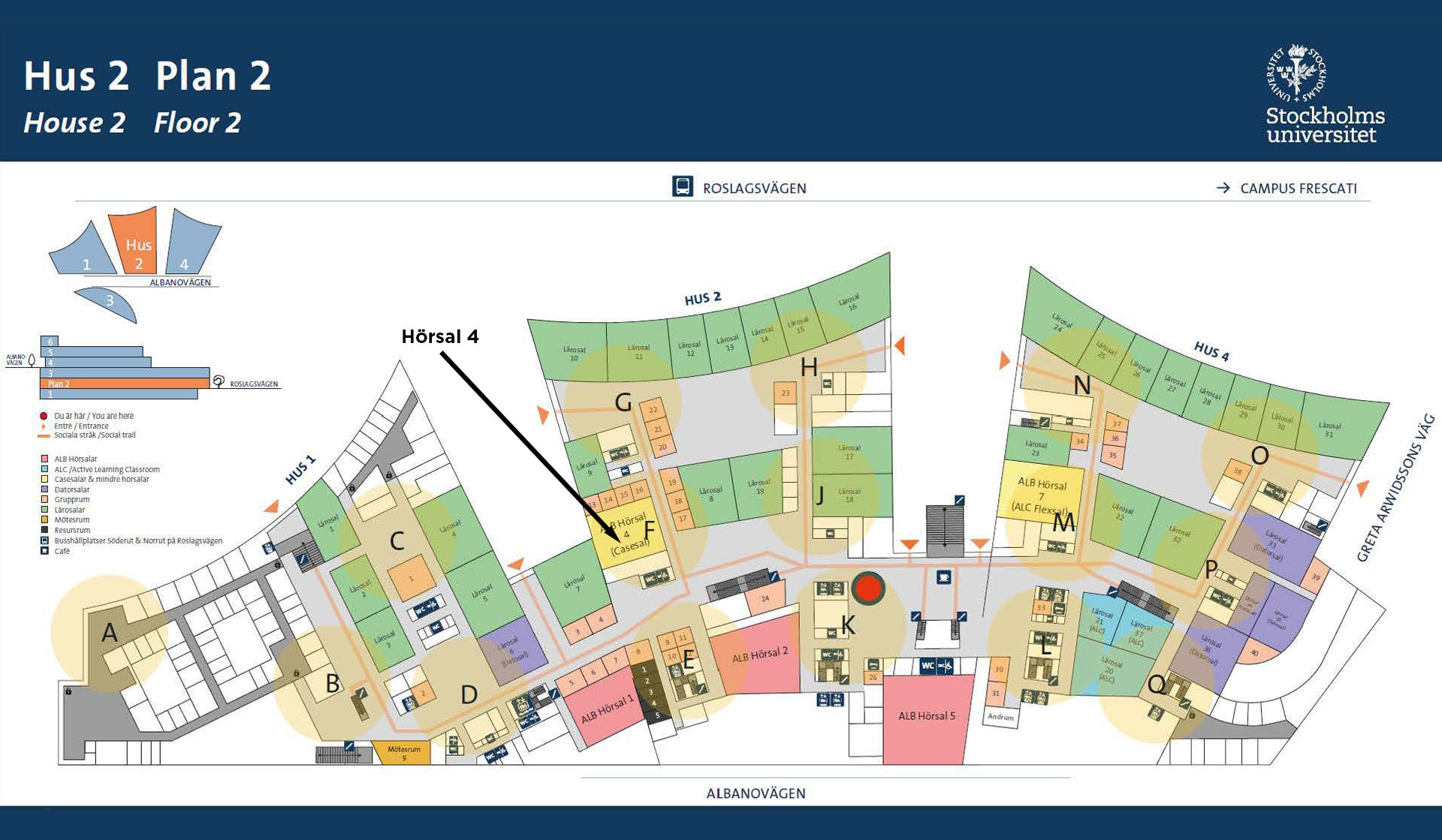
How to find Campus Albano, ALB Lecture Hall 4, Albano House 2, Floor 2

Directions

Link with walking directions from Elite hotel Arcadia to Roslagsvägen 34, Campus Albano, House 2: https://maps.app.goo.gl/DrgLE2NNuR8WDNSY9 

Your direction, see blue arrow

Entrance to house 2, see green marks

Lecture Hall 4

Lecture Hall 4 (Hörsal 4) see arrow above.

Contact Information

Get in Touch

For questions, contact us at the email below.
Name E-mail Message Send